She Had No Symptoms. No Lump. Her Mammogram Was Clear. She Had Cancer.
Joy was 43, doing everything right — annual mammograms, no alarming family history, no symptoms. Her mammogram came back completely normal.
Then researchers followed up with advanced imaging. Joy got a call: “We think we see something.”
Her story, documented by NPR, ended well: the tumor was caught early, removed completely, before it had spread anywhere. Not because a lump appeared — because the right imaging was done at the right time.
For women in Georgia asking whether a breast MRI belongs in their screening routine, Joy’s outcome is the answer.
What a Mammogram Can and Cannot Do
Mammograms save lives, and annual screening remains essential. But they have a documented blind spot.
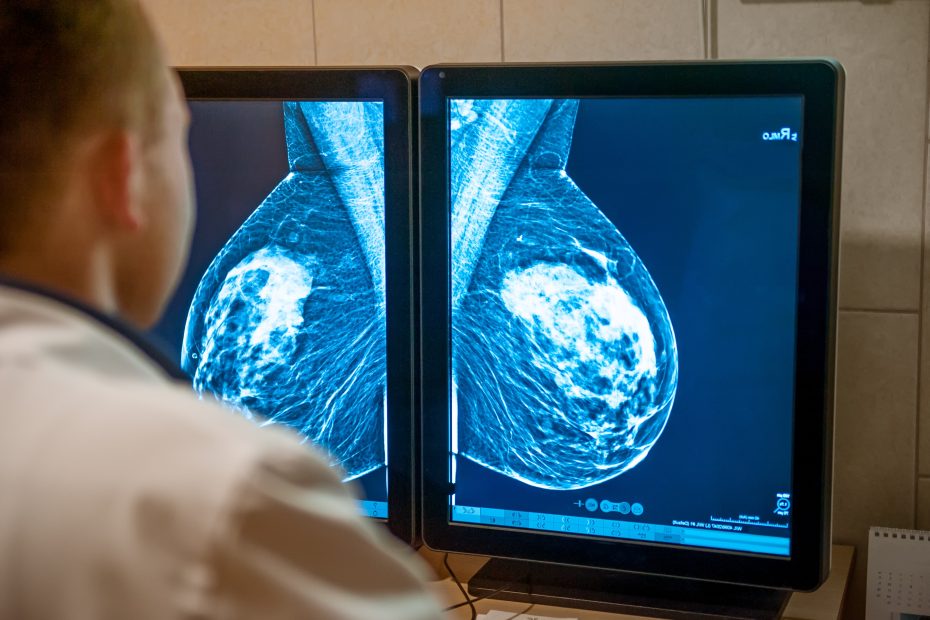
Dense breast tissue and tumors both appear white on a mammogram. In a dense breast, a tumor can hide in plain sight. The American Cancer Society reports that mammograms miss about 1 in 8 breast cancers overall — and in women with extremely dense breasts, they detect only 30–48% of cancers, meaning more than half may go undetected until symptoms appear.
About 40% of women who get mammograms have dense breasts. As of September 2024, the FDA now requires all mammogram reports to disclose breast density — so if your report says “dense,” it’s worth a conversation with your doctor about supplemental screening.
Why “Early” Is the Only Word That Matters in Breast Cancer
The survival numbers are stark. According to the National Cancer Institute’s SEER database:
5 Year Survival Rate for Breast Cancer, by Stage at Diagnosis
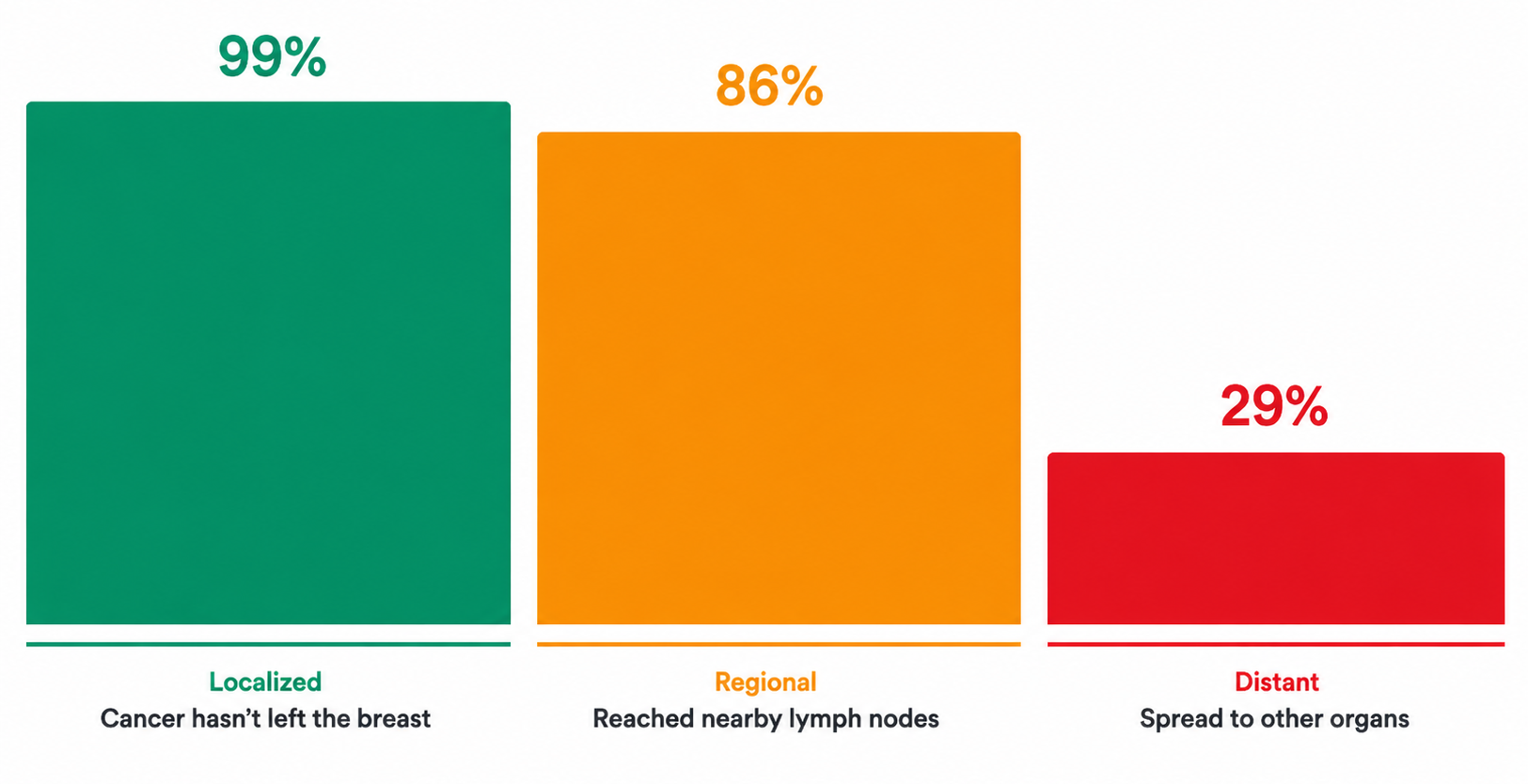
Source: National Cancer Institute SEER Database. 5-year relative survival rates for female breast cancer by stage at diagnosis.
The difference between those outcomes isn’t primarily about treatment — it’s about timing. The CDC reports that roughly one in three U.S. women are not diagnosed until cancer has already begun to spread. Earlier imaging changes that.
Getting an Early Breast MRI in Georgia
For women in the Norcross areas, MRI Imaging Specialist offers breast MRI as part of a full suite of women’s imaging services — including 3D mammography with their Hologic system, ultrasound, and bone density scans.
Request an AppointmentNorcross
(678) 969-0904
6760 Jimmy Carter Blvd, Suite 165
A few things Georgia patients commonly ask:
Do I need a referral? In most cases, yes — a physician’s order is required for diagnostic breast MRI. If your mammogram report noted dense tissue or elevated risk, your primary care provider or OB-GYN can refer you.
What about cost and insurance? Coverage varies by plan and clinical indication. MRI Imaging Specialist works with patients on cash pricing as well as insurance, attorney liens, and worker’s compensation claims. Calling ahead to discuss your situation is the best first step.
How quickly will I get results? MRI Imaging Specialist offers same-day turnaround on regular readings and a two-hour turnaround for STAT reads — which matters when you are waiting on news that affects your next steps.
How MRI Finds Cancer Before You Ever Feel It
MRI uses a magnetic field and radio waves — not X-rays — to create detailed 3D images unaffected by breast density. It sees through dense tissue the same way it sees through fatty tissue.
A 2023 systematic review published in Radiology analyzed over 132,000 women with dense breasts who had already received a negative mammogram. Supplemental MRI found 541 cancers that had been missed. Of all supplemental methods studied, MRI was the most effective.
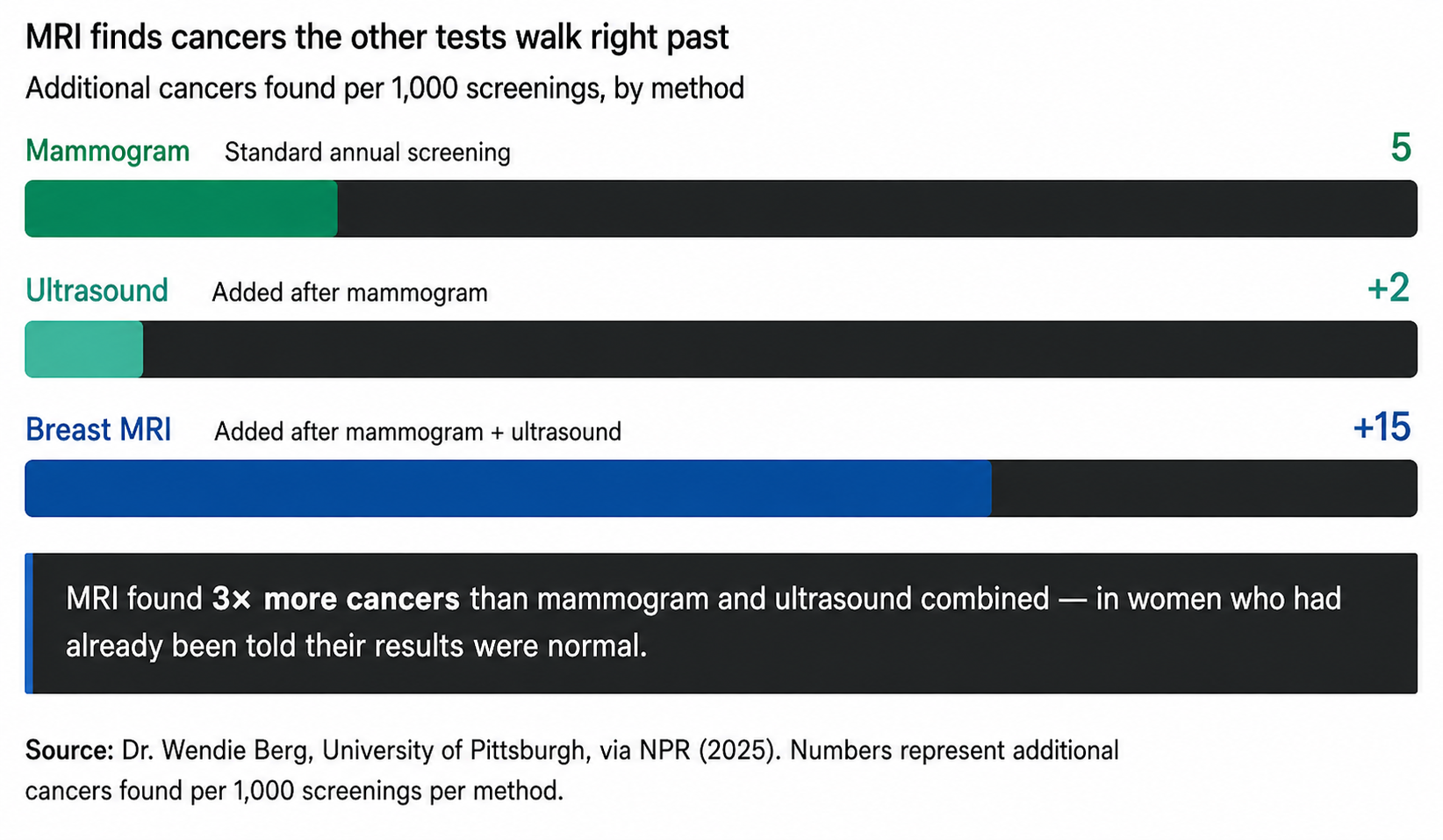
Dr. Wendie Berg, a breast imaging expert at the University of Pittsburgh, put it plainly for NPR: mammograms detect about 5 cancers per 1,000 screenings. Adding MRI found 15 more per 1,000 — even after mammogram and ultrasound had already been done.
A peer-reviewed case in RadioGraphics illustrates this directly: a 61-year-old woman with a BRCA2 mutation had negative mammogram and ultrasound results. Five months later, a supplemental MRI identified a small invasive cancer — before lymph node involvement, before any symptoms.
The team at MRI Imaging Specialist — with locations in Norcross, — sees this pattern regularly: women who come in after a clear mammogram and leave with a finding that, caught now, is still fully treatable.
Who Should Consider an Early Breast MRI
A breast MRI works best alongside a mammogram, not instead of one. Doctors typically recommend it for women who have the most to gain from finding cancer as early as possible.
When Your Doctor May Recommend a Breast MRI
Dense breast tissue
Mammogram report shows heterogeneously or extremely dense breasts (categories C or D)
Elevated risk
BRCA1/2 mutation, strong family history, or prior breast cancer diagnosis
Inconclusive mammogram
Abnormal or unclear result needing a closer look before deciding on biopsy
Breast implants
Scar tissue and implants can obscure mammogram results; MRI sees past them
Younger patients
Naturally denser tissue at younger ages; MRI has no radiation for frequent monitoring
Your Next Step Is a Simple One
Joy didn’t know she had cancer. Her mammogram said she didn’t. What changed her outcome was one additional scan, done at the right time. If your report says “dense,” or your risk is elevated, or your last mammogram left a question unanswered — that scan is available now, at a location near you. The best time to find cancer is before you feel it.