
That aching shoulder is not just a pulled muscle. It could be a rotator cuff tear — and a shoulder MRI will tell you for certain.
Most people push through the discomfort. They stretch, sleep on the other side, and wait it out. But rotator cuff tears rarely heal on their own. Without a diagnosis, the damage silently worsens — and what starts as a small tear can become a full rupture requiring surgery.
By the end of this article, you’ll understand what a shoulder MRI detects, why early imaging matters, and how to get scanned quickly at locations in Norcross, Jonesboro, and Gainesville, GA.
Quick Answer: What Does a Shoulder MRI Detect? A shoulder MRI can identify:
- Full and partial rotator cuff tears
- Tendon inflammation and degeneration
- Labrum damage
- Fluid buildup around the joint
- Bone abnormalities and impingement
What Is a Rotator Cuff Tear?
The rotator cuff is made up of four muscles and their tendons. Together, they stabilize the shoulder joint and power every arm movement — from reaching overhead to rotating behind your back.
A tear occurs when one or more tendons pull away from the bone. It can happen suddenly from a fall or acute injury, or develop gradually over years of repetitive use.
Common causes include:
- Repetitive overhead motions (throwing, painting, lifting)
- Age-related tendon degeneration after 40
- Acute trauma from a fall or direct impact
- Heavy lifting with improper form
What Are the Symptoms of a Rotator Cuff Tear? Symptoms vary by tear severity. Common signs include:
- A deep, dull ache in the shoulder
- Weakness when lifting or rotating the arm
- Pain that worsens at night or when lying on the shoulder
- Difficulty reaching overhead or behind your back
- A clicking or catching sensation with movement
⚠️ Warning: These symptoms overlap with bursitis, tendinitis, and arthritis. Symptoms alone cannot confirm a tear. Only imaging provides a definitive answer.
Why Early Detection Changes Everything
Partial tears can progress to full-thickness tears. Full tears often require surgical repair. Detecting damage early expands your treatment options — physical therapy, corticosteroid injections, and minimally invasive procedures — and may prevent surgery altogether.
What MRI Reveals That X-Rays and Ultrasound Miss
X-rays show bone clearly. They cannot show tendons, muscles, or soft tissue damage at all.
Ultrasound provides real-time images and works well for many tendon tears. But it is less complete for deep structures like the labrum, and results depend heavily on technologist skill.
A shoulder MRI delivers the most complete, detailed view of soft tissue damage available — without surgery or radiation.
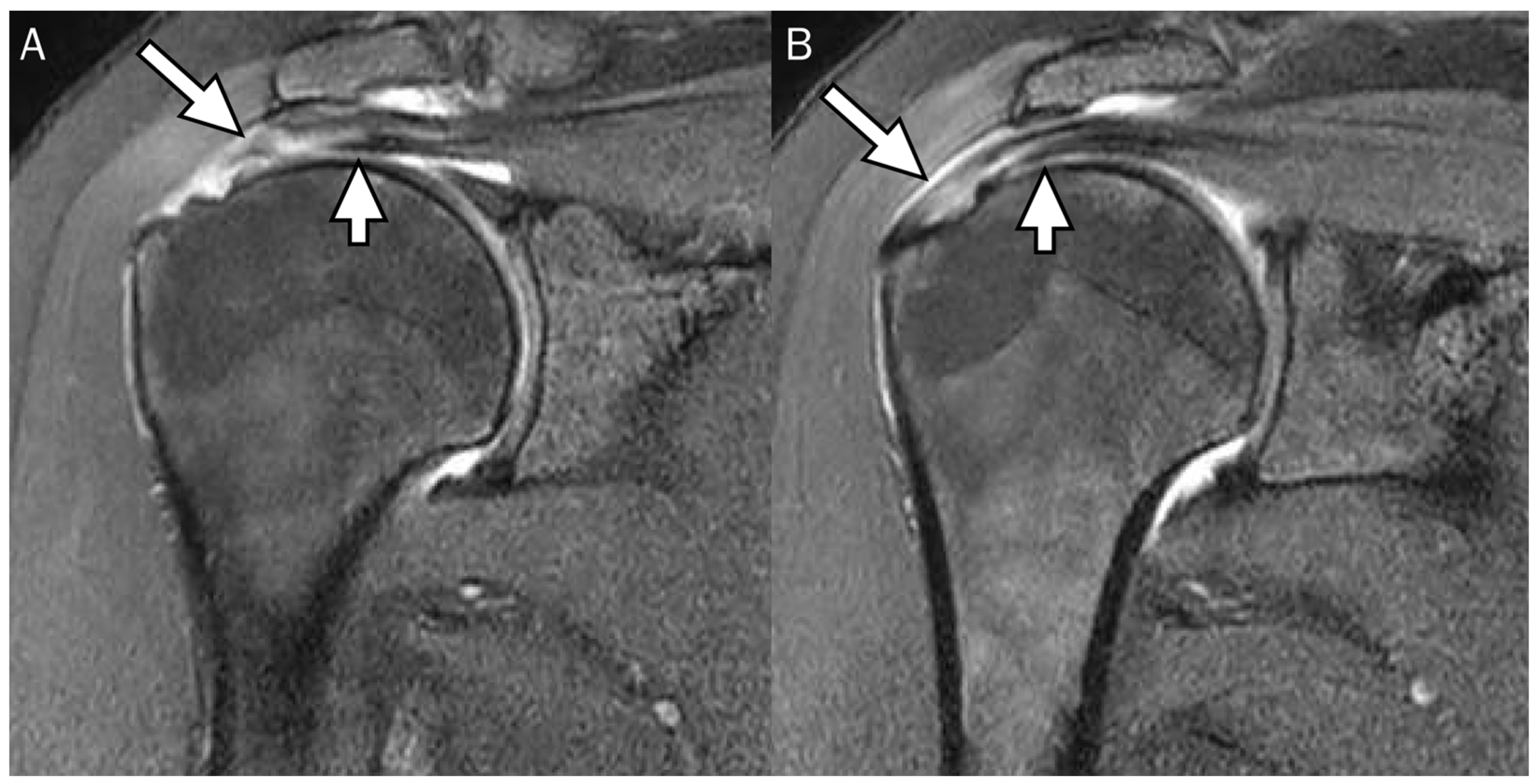
“MRI is the gold standard for diagnosing rotator cuff pathology. It allows us to visualize the exact location, size, and extent of a tear — information that directly guides treatment decisions.” — Board-Certified Radiologist, MRI Imaging Specialist
Shoulder Imaging Comparison
| Imaging Type | Shows Bones | Shows Soft Tissue | Shows Tear Detail | Uses Radiation |
| X-Ray | ✅ Yes | ❌ No | ❌ No | ✅ Yes |
| Ultrasound | ⚠️ Limited | ✅ Yes | ⚠️ Limited | ❌ No |
| Shoulder MRI | ✅ Yes | ✅ Yes | ✅ Yes | ❌ No |
MRI uses no ionizing radiation. It is safe, non-invasive, and produces high-resolution images your physician can act on immediately.
How to Get a Shoulder MRI in Norcross, Jonesboro, or Gainesville, GA
Here is exactly what to do — step by step.
- Note your symptoms. Write down when pain started. Log what movements cause it.
- See your doctor. Visit your primary care physician or an orthopedic specialist.
- Request a shoulder MRI referral. Ask specifically for MRI imaging of the shoulder joint.
- Verify your insurance. Most plans cover MRI with a referral. Confirm your benefits before scheduling.
- Book your scan at MRI Imaging Specialist. Three convenient Georgia locations are available.
💡 Tip: Call the location nearest you for the fastest scheduling.
Stop Guessing. Start Healing.
Shoulder pain is a signal. Ignoring it costs time, worsens damage, and narrows your options.
A shoulder MRI gives you a clear, accurate diagnosis — fast. At MRI Imaging Specialist, patients across Norcross, Jonesboro, and Gainesville, GA get access to advanced diagnostic imaging with board-certified radiologists and fast turnaround on results.
In addition to shoulder MRI, services include CT/CT Angiography, Digital X-Ray, Ultrasound 3D/4D, I-Cat 3D Mammography, Bone Density Scans, and Women’s Imaging Services.
Don’t wait for a small tear to become a surgical problem.
Book Your Shoulder MRI
Three convenient Georgia locations are available to get an MRI of your shoulder.
Request an AppointmentNorcross
(678) 969-0904
6760 Jimmy Carter Blvd, Suite 165
Jonesboro
(678) 545-6778
6568 Tara Blvd, Suite B
Gainesville
(678) 989-4566
955-E Interstate Ridge Business Park