
Aside from skin cancer, prostate cancer is the most commonly diagnosed cancer in American men. In Georgia alone, it ranks among the top 8 states for prostate cancer deaths — yet many cases caught early are highly survivable. The problem is that early detection has historically relied on a test that misses too much.
If you’re a man over 40, what you use for screening matters. This article explains why MRI prostate imaging is changing that picture — and what it means for patients in Georgia.
Quick Answer: Why is MRI better for prostate cancer detection?
- MRI detects clinically significant cancer PSA tests can miss
- It reduces unnecessary biopsies by more than 50%
- MRI with and without contrast maps tissue in 3D detail
- 96% of men with a normal MRI had no aggressive cancer found within 3 years (JAMA Oncology)
What Is an MRI Prostate Scan?
An MRI prostate scan uses magnetic fields — not radiation — to produce detailed images of the prostate gland. Unlike a standard PSA blood test, MRI maps actual tissue structure. Radiologists can identify suspicious lesions, assess their size, and score them using PI-RADS (Prostate Imaging-Reporting and Data System).
- Non-invasive imaging with no ionizing radiation
- Captures T2-weighted, diffusion, and perfusion sequences
- PI-RADS scoring guides biopsy decision-making
- Available as biparametric (bpMRI) or multiparametric (mpMRI)
MRI Prostate With and Without Contrast
Multiparametric MRI uses a contrast agent — injected intravenously — to assess blood flow patterns within the prostate. Cancerous tissue tends to show different perfusion characteristics than healthy tissue. This MRI prostate with and without contrast approach significantly improves specificity for aggressive tumors.
Biparametric MRI skips the contrast injection and is appropriate for lower-risk screening scenarios. Your radiologist will determine which protocol is right for you.
Who Should Consider an MRI Prostate Scan in Georgia?
- Men 40+ with a family history of prostate cancer
- Men with elevated or rising PSA levels
- Men whose PSA results are inconclusive (the “gray zone” of 4–10 ng/mL)
- Men who have had a prior negative biopsy but symptoms continue
- Black men, who face a statistically higher risk and should discuss earlier screening with their physician
The Evidence: What the Research Shows
1 in 8
Men will be diagnosed with prostate cancer in their lifetime (ACS 2024)
96%
Of patients with a normal MRI had no aggressive cancer found at 3 years (JAMA Oncology)
54%
Biopsy reduction rate when MRI-guided pathways are used (British Journal of Radiology)
#8
Georgia’s national rank for prostate cancer mortality (ZERO Prostate Cancer, 2024)
Sources: American Cancer Society (2024), JAMA Oncology (Hamm et al., 2024), British Journal of Radiology, ZERO Prostate Cancer (2024)
A study published in JAMA Oncology found that an MRI-first approach was reliably safe over a three-year follow-up period. Researchers confirmed that 96% of patients with a negative MRI did not develop aggressive prostate cancer within three years — giving patients and physicians a data-backed reason to trust normal imaging results without an immediate biopsy. The ASCO Post
Meanwhile, prostate cancer diagnoses in the U.S. are rising — up 3% per year overall and approximately 5% per year for advanced-stage disease, according to the ACS 2024 Cancer Facts and Figures. Advanced-stage disease is harder to treat. Early detection with MRI changes that outcome. American Cancer Society
Normal MRI findings alone do not offer 100% certainty,” says Dr. Charlie Hamm, lead author of the JAMA Oncology study at Charité – Universitätsmedizin Berlin, adding that regular monitoring can still catch cancer early
How the MRI Prostate Process Works
Scheduling an MRI prostate scan at MRI Imaging Specialist is straightforward. Here’s what to expect:
Step 1 — Get a referral or self-refer. Talk to your urologist or primary care physician. Men with a PSA in the gray zone (4–10 ng/mL) are strong candidates. Many patients at MRI Imaging Specialist’s Georgia locations come through physician referrals.
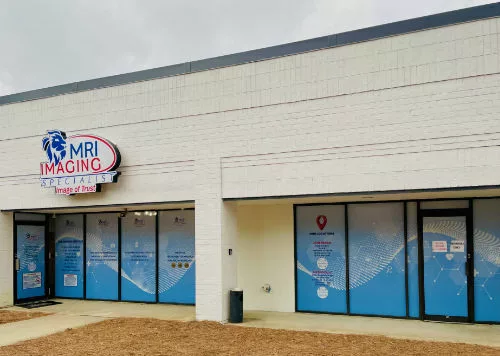
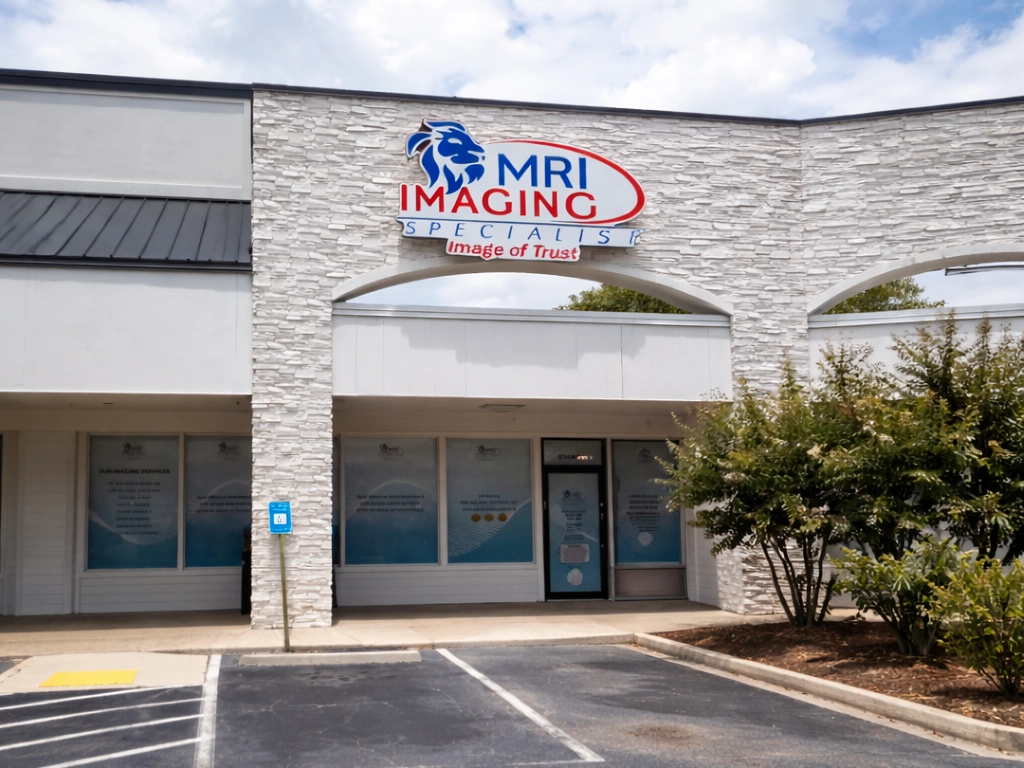
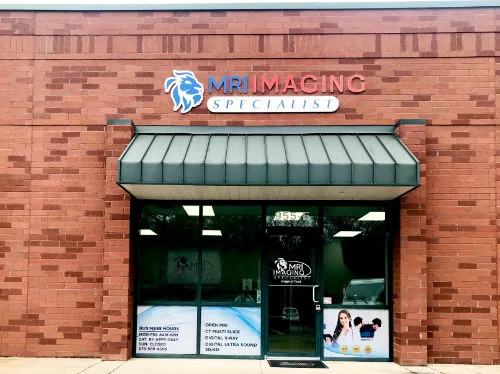
Step 2 — Schedule your scan. Book at the Norcross, Jonesboro, or Gainesville location closest to you. Staff will confirm whether your scan calls for contrast or not.
Step 3 — Prep on the day. Wear comfortable clothing. Remove metal objects. The scan takes 30–60 minutes. No radiation is used.
Step 5 — Share results with your physician Your doctor uses MRI findings to decide whether a targeted biopsy is warranted — or whether active surveillance is appropriate.
⚠️ Important: MRI does not replace a biopsy for diagnosis. It guides whether a biopsy is needed — reducing unnecessary procedures while improving detection of aggressive disease.
Get an MRI Prostate Scan in Georgia
Prostate cancer caught early is highly treatable. The five-year relative survival rate for prostate cancer is 98% overall, according to CDC Cancer Statistics — but survival drops sharply when the disease is found at a distant stage. Waiting for symptoms is not a strategy, because early prostate cancer usually has none.
MRI Imaging Specialist provides outpatient MRI prostate imaging across three Georgia locations, with no hospital visit required. Results are read by experienced radiologists and returned promptly to your physician.
Schedule Your MRI Prostate Scan
Three Georgia locations. No hospital required. Board-certified radiologists.
Book Your Scan at MRI Imaging SpecialistNorcross
(678) 969-0904
6760 Jimmy Carter Blvd, Suite 165
Jonesboro
(678) 545-6778
6568 Tara Blvd, Suite B
Gainesville
(678) 989-4566
955-E Interstate Ridge Business Park