You feel fine. No pain. No broken bones.
But your bones could be thinning right now, and you’d never know it.
Osteoporosis has no symptoms until something breaks. A bone density test can find it years earlier. Here’s who should get one, what your T-score means, and how to get a DEXA scan in Norcross, GA.
Quick answer: A DEXA scan is a quick, painless, low-dose X-ray that measures bone density, usually at the hip and lower spine. All women 65 and older should be screened, along with postmenopausal women under 65 who have risk factors. A T-score of -1 or higher is normal, between -1 and -2.5 is osteopenia, and -2.5 or lower is osteoporosis.
What a DEXA Scan Measures
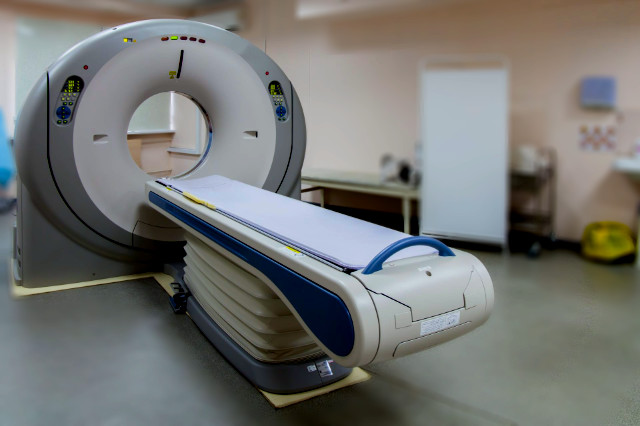
A DEXA scan (short for dual-energy X-ray absorptiometry, also written DXA) uses two low-energy X-ray beams to measure how much mineral is packed into your bones. It is today’s standard test for bone mineral density.
At our Norcross imaging center, a bone density test is most often done on the lower spine and hips. These are the areas where the most serious osteoporosis fractures happen.
A bone density test can:
- Diagnose osteoporosis before you break a bone
- Estimate your chances of a future fracture
- Show whether osteoporosis treatment is working
Who Should Get a Bone Density Test?
In January 2025, the U.S. Preventive Services Task Force (USPSTF) updated its osteoporosis screening recommendation. It advises screening for:
- All women 65 and older
- Postmenopausal women under 65 who are at increased risk, based on a clinical risk assessment by their provider
For men, the Task Force found there isn’t enough evidence to recommend routine screening. If you’re a man over 70 or have risk factors, ask your doctor whether a bone density test makes sense for you.
- A parent who broke a hip
- Current smoking
- Heavy alcohol use
- Low body weight
- Long-term use of steroid medications
Real-World Proof: What Your T-Score Means
Your DEXA report includes a T-score. It compares your bone density with that of a healthy young adult of the same sex at peak bone mass.
| T-Score | What It Means |
| -1.0 and above | Normal bone density |
| Between -1.0 and -2.5 | Osteopenia (low bone mass) |
| -2.5 and below | Osteoporosis |
Your report may also include a Z-score, which compares your bone density with people your own age. A low T-score doesn’t automatically mean you need medication. Your doctor looks at your T-score along with your age, health history, and other risk factors to decide on next steps.
Why does screening matter so much? The research reviewed by the Task Force found that screening older, high-risk women led to fewer hip fractures than usual care. As USPSTF member Dr. Esa Davis said when the 2025 recommendation was released, “Too often, the first sign of osteoporosis is a broken bone.”
A DEXA scan gives you and your doctor a chance to act before that happens. At MRI Imaging Specialist in Norcross, every scan is interpreted by our board-certified radiologists.
How to Prepare for Your DEXA Scan in Norcross
- Talk to your doctor. Ask whether you’re due for a bone density test based on your age and risk factors
- Call our Norcross center to schedule. Bone density scans are available at our Norcross location.
- Bring what you need. Please bring a photo ID, your insurance information and the prescription from your physician to your appointment.
- Keep your routine. You may eat, drink and take medications as usual unless you are advised differently
- Dress for the scan. Wear comfortable clothing that is free from any metal, such as buttons and zippers. If this is not possible, we will provide you with a gown to wear during your exam.
- Relax on the table. You’ll lie still while the scanner arm passes over you. There’s no tube and no needles.
💡 Tip: Ask our scheduler about calcium supplements. RadiologyInfo.org, published by the American College of Radiology and the Radiological Society of North America, advises not taking them for at least 24 hours before a DEXA scan.
⚠️ Warning: Tell our scheduler if you are pregnant or might be. Also mention any recent imaging exam that used contrast dye, since it may affect when your scan can be done.
After your exam, our radiologists interpret your images and send a report directly to your doctor. Your doctor will communicate the results to you. We offer same-day turnaround for regular readings and 2-hour turnaround for STAT readings.
DEXA Scans in Norcross, Close to Home
You’ll find us at 6760 Jimmy Carter Blvd, Suite 165, Norcross, GA 30071. Jimmy Carter Boulevard links I-85, Buford Highway, and Peachtree Industrial Boulevard, making the trip simple from most of Gwinnett County. [CONFIRM: add one nearby landmark]
Patients come to us from Norcross, Peachtree Corners, Duluth, Lilburn, Tucker, and Doraville.
Sources: U.S. Preventive Services Task Force, Screening for Osteoporosis to Prevent Fractures: Final Recommendation Statement (JAMA, January 2025); USPSTF news bulletin on the final osteoporosis screening recommendation (January 14, 2025); RadiologyInfo.org (ACR/RSNA), Bone Densitometry (DEXA, DXA); Mayo Clinic, Bone Density Test (DXA/DEXA Scan); University of Rochester Medical Center, DEXA Scan.
Book Your Bone Density Test in Norcross
If you’re 65 or older, or you’ve gone through menopause and have risk factors, a bone density test is one of the easiest ways to protect your future. It’s quick, painless, and could stop a fracture before it happens.
Learn more about the scan on our Bone Density Scan page, or see all our Women’s Imaging Services.
Request an AppointmentNorcross
(678) 969-0904
6760 Jimmy Carter Blvd, Suite 165
Jonesboro
(678) 545-6778
6568 Tara Blvd, Suite B
Gainesville
(678) 989-4566
955-E Interstate Ridge Business Park
Our Jonesboro and Gainesville centers offer other imaging services. Visit our Women’s Imaging Services page to see everything we offer for women.